
Reverse Outlining
What you actually wrote versus what you think you wrote

This week’s post makes good on a promise I ventured in a previous one (“Revising a Draft: Learning to See Anew”) to write about the dreaded “reverse outline.” There, I advised engaging in this step of the writing process after drafting but before revising when you find yourself facing this situation: “You don’t need to throw it all out, but the material is a mess of ‘promising insights’ with some malarkey mixed in.”
Recently, I found myself facing exactly that. One of my trusted beta readers said this about my first draft of Chapter 2:
“This needs a complete rethink. It was the only part of the book that I found a ‘bit of a slog’ to get through. I struggled to understand where I was in terms of connecting the material to your broader theme and I am not really sure even after having read it twice if all of the material is really needed for your audience.”
Boom! That person was totally right. Before I could take out my red pen to revise Chapter 2, I needed to reverse outline the chapter. But before reverse outlining, I made a strong cup of coffee and had a pot of tea steeping in the wings . . . . It was going to be a loooong weekend.
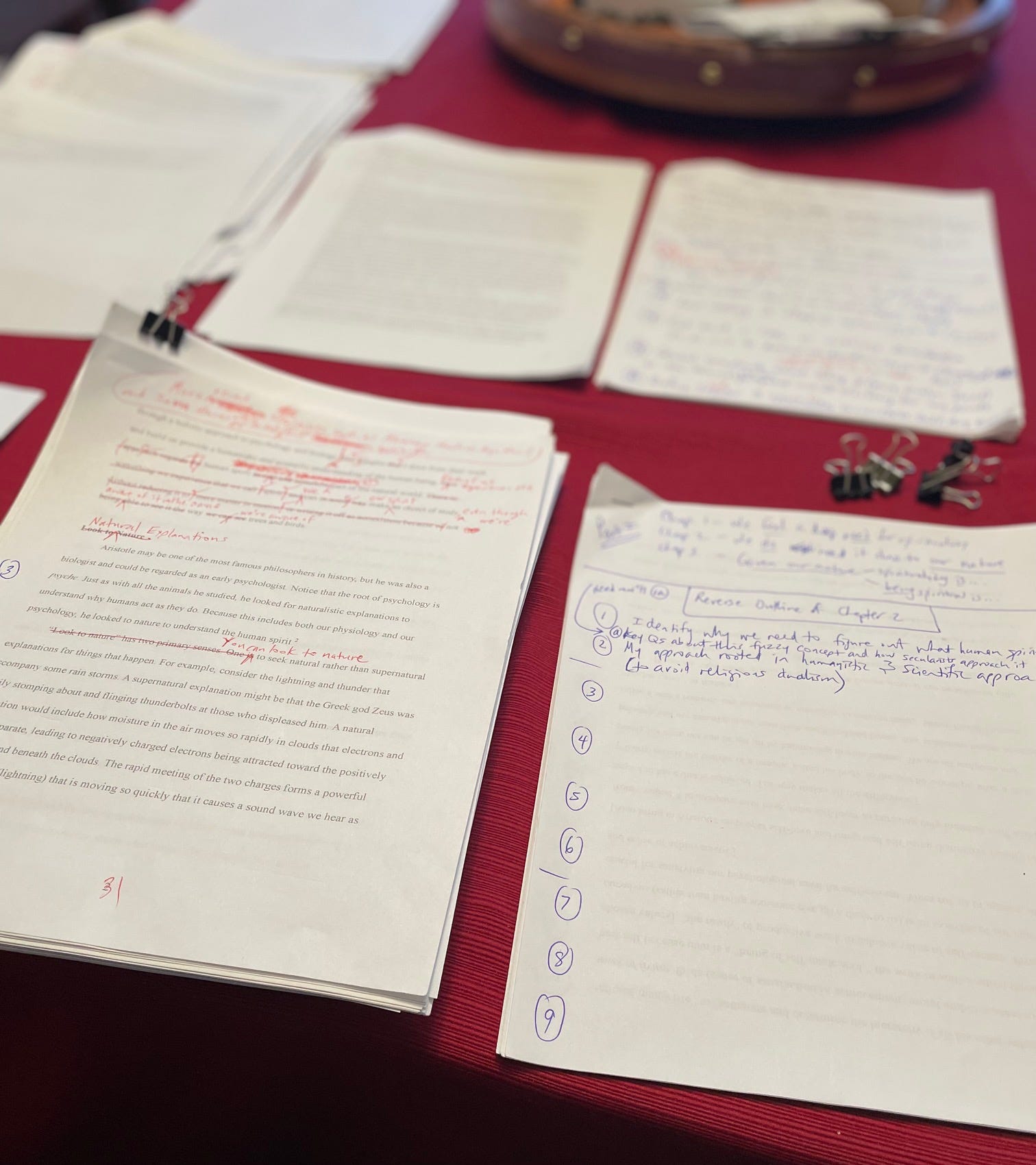
Here are the basics of reverse outlining:
(1) Number the paragraphs in your draft. In my case, Chapter 2 had 49 paragraphs (spread across five sections). I use a blue pen for this. Red pens, for me, are for copyediting and proofreading.
(2) Take out a few sheets of blank paper for your reverse outline and list the same amount of numbers as there are paragraphs in your draft (as pictured above). If you’re using lined paper, leave no more than two lines per number.
(3) After each number in your reverse outline, write in one brief sentence what the point of the corresponding paragraph in your draft is. Be ruthlessly honest in this step!
(4) If upon re-reading paragraph 17, you are unclear what your point is, then write “????” next to number 17 in your reverse outline. Make a note to yourself that you need to figure out and clarify your point, else this paragraph is a strong candidate for the cutting-room floor.[1] If upon re-reading paragraph 31, you realize that you crammed three different points in it, identify each of those points and make a note to yourself that they need to be spliced out into three new paragraphs with each point developed and explained more fully and clearly. And so on.
(5) Once you fill in your reverse outline, carefully review it to see what you actually wrote. This will usually be very different from what you thought you wrote. Make notes to yourself about:
a. What needs to be reorganized. You may need to move entire sections around for better logical flow. If paragraphs 8-14 (of section 2) need to be moved between paragraphs 21 and 22, so that they become section 3, so be it.
b. What needs to be
deletedremoved from your draft. If a point or idea doesn’t serve your purpose, you will lose your audience, so clear those obstacles out of the way.c. What needs to be expanded and developed. This happens especially when you cram more than one point in a paragraph.
d. What can be condensed. Sometimes, you might have dragged out a point over multiple paragraphs, when only one is needed. Trim out unnecessary material and condense those ideas into one more streamlined paragraph.
e. What is missing. Once you see what you actually wrote, you can see “the gaps.” Identify what new points you need to develop and where they belong in your new outline.[2]
f. Whether you need more or fewer sections. After deciding what stays, what goes, what gets condensed, and what gets moved around, you might realize that your ideas are better grouped in six or seven (or four) sections rather than five.
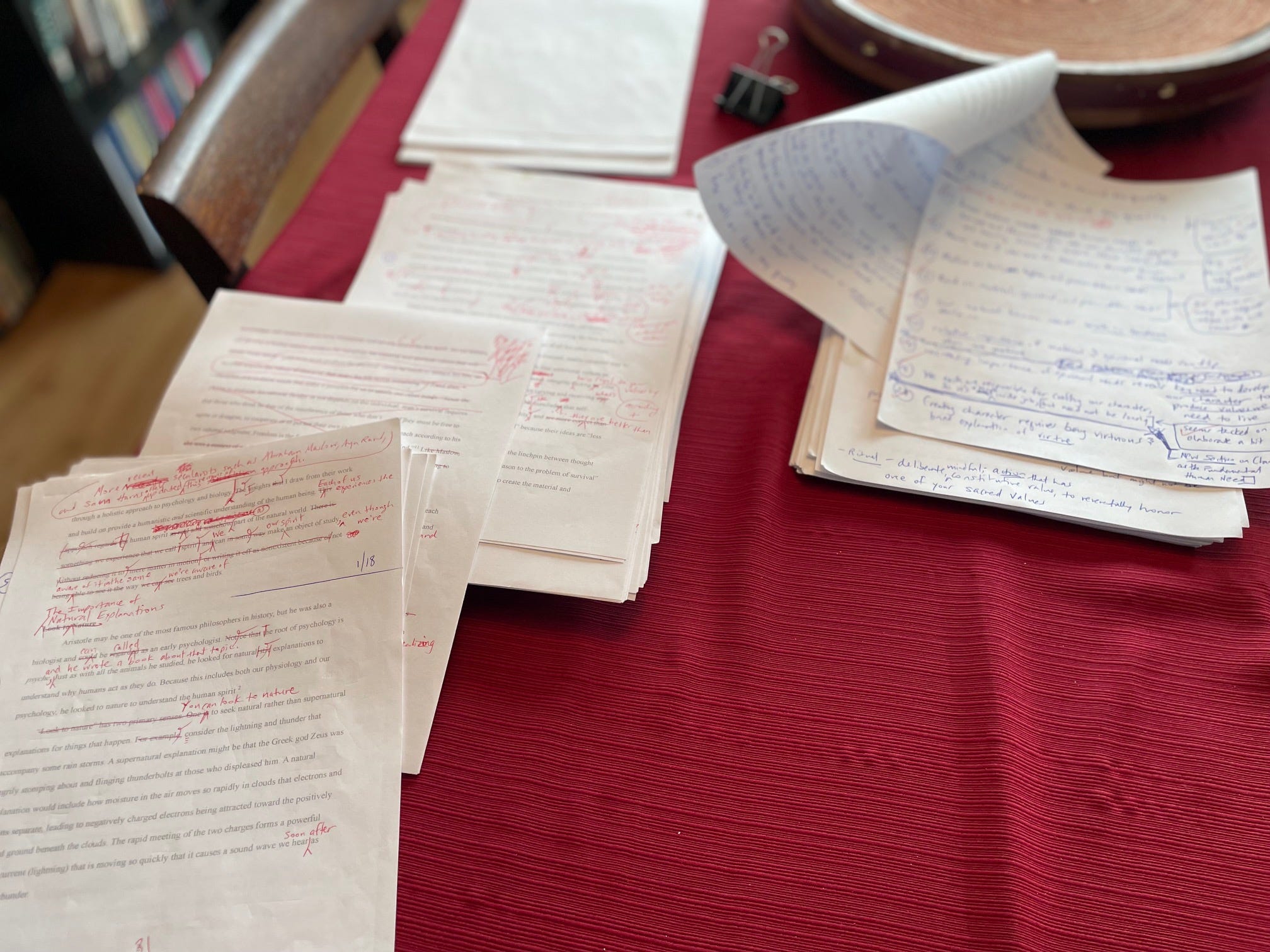
(6) Now you’re ready to pull out your red pen. With your extremely useful reverse outline at your side as a roadmap, you can tackle revising that draft with clarity and confidence.
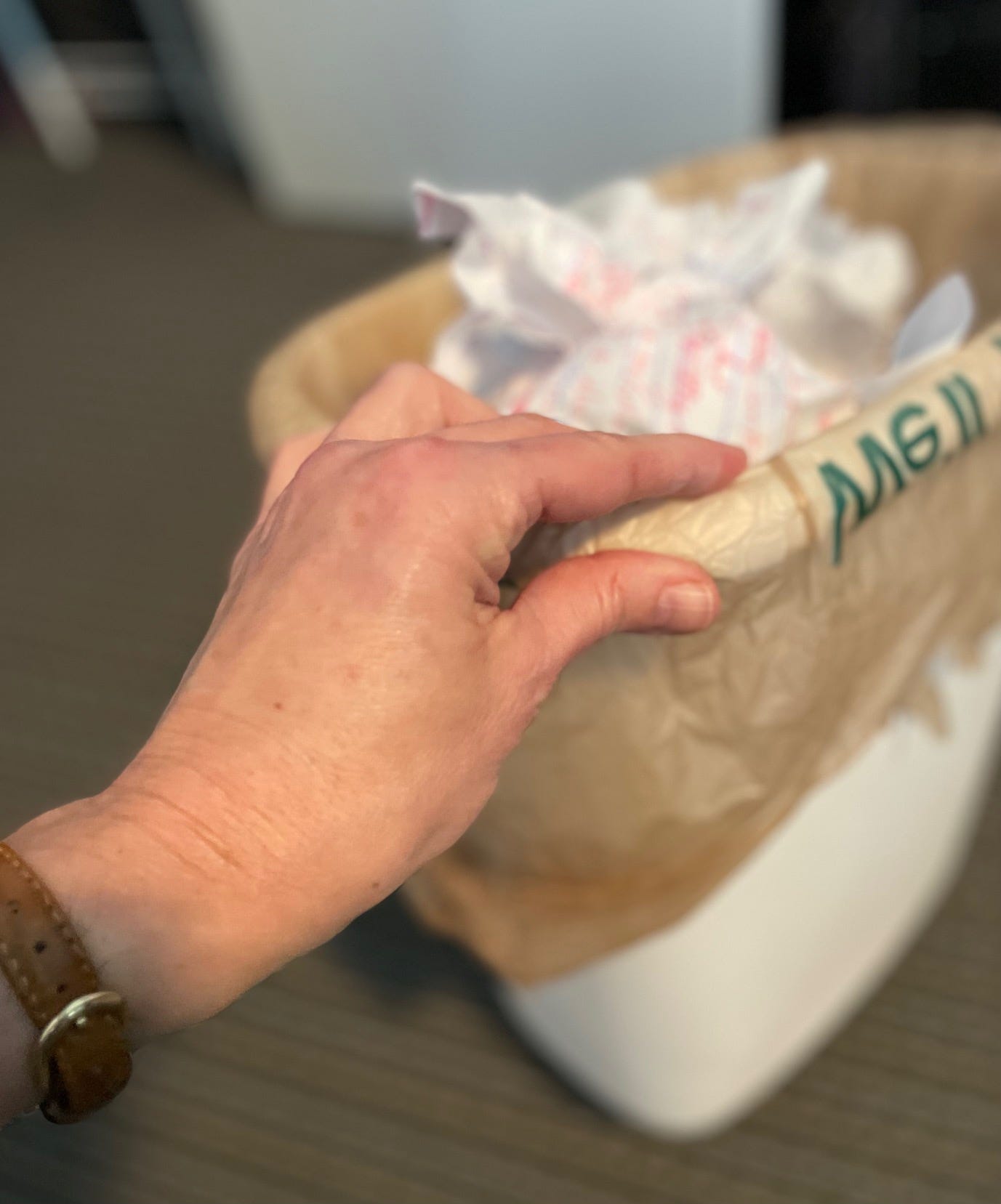
Because I cannot emphasize this enough, here again is a photo of my trash basket (see below). Yes, that’s some of my work in it, right where that stuff belongs. Don’t take personally the need to throw out some of your work. While some stuff is off the mark, you make zero of the shots you never take. As mega-awesome basketball player Michael Jordan inspiringly said:
“I’ve missed more than 9,000 shots in my career. I’ve lost almost 300 games. 26 times, I’ve been trusted to take the game winning shot and missed. I’ve failed over and over and over again in my life. And that is why I succeed.”[3]
[1] By “cutting-room floor,” I mean a separate document with a suitable name (e.g., “Chapter 2 Outtakes”) in which you cut and paste everything you choose to remove from your draft. You never know when that material might come in handy for other purposes. I cut and pasted five entire paragraphs (and at least two dozen straggler sentences) from Chapter 2 into my outtakes document as a result of this process.
[2] This means that your reverse outline effectively serves as the basis of a new outline that you’ll follow to revise your material at the next stage of the writing process.
[3] Michael Jordan, “One of the Greatest Speeches Ever,” Best Motivation, YouTube.
These are the kinds of manoeuvres I had to undertake when rewriting my book, but I had no such system. I had to do it all in my head by repetitive rereading. I did take copies of what I was rejecting and found them a valuable resource to extract from. This is a great plan for future use.
I appreciate the insights about your writing process! I'd never heard of this technique before, let alone used it.